07483 234109 appt@susancollini.com
Nature therapy for mental health

Nature therapy for mental health

How Nature helps improve mental health

Nicola’s story

Nicola had been really struggling with her mental health, unable to get rid of feelings of being stressed out and overwhelmed by life. She had explored various routes to help her feel better, including signing up for a relaxation class. The trouble was that every time she attended and tried to relax she just couldn’t, felt she was failing and that made her feel even worse.

Then someone suggested she sign up to a Nature Immersion session in a woodland to help improve her mental health. This seemed a bit unlikely to Nicola to begin with, but she decided to give it a go because she was, frankly, beginning to feel a bit desperate.

As soon as Nicola had got out of her car at the woodland she was struck by how loudly the birds were singing and also how within a few minutes she seemed to be able to breathe more deeply and easily and how pleasant that felt.

Over the next few weeks, with guidance, Nicola learned how to tune into nature at a level she had never imagined possible before and how through doing so it was possible to help herself connect with a greater sense of calmness in her head that felt, so much of the time normally, fit to burst. 

Over a few sessions of Nature Immersion Nicola found it easier and easier to access a state of relaxation through tuning into the sights and sounds of nature, noticing more than she had ever done before in both the woodland and in herself. 

The Nature connection activities Nicola was introduced to helped still her mind, relax her body and by the end of each session she noticed a definite reduction in her stress levels and felt somehow enveloped in a bubble of calmness. 

Nichola shared her experiences with others in the group as they sat in the log circle at the end of each session, Sarah felt a sense of community and connectedness that she hadn’t experienced in a long time.

As the weeks went on, Nicola also noticed that through pursuing a deeper connection with nature she felt more deeply connected to herself. It felt good.  

Nicola realised that spending time in the woodland has really helped her with her mental health. She not only had developed a deeper appreciation of the natural world but felt more grounded and able to slow down her incessant, whirring mind that was just exhausting to live with.

Nicola realised the power of Nature Connection in helping her slow down, notice more and be able to just let thoughts go, rather than just allowing them to chatter on and on inside her head. Just knowing she now had a ‘happy place’ to go made things so different, not to change her life circumstances but to help her approach in dealing with them day to day with a greater sense of calmness and resilience.

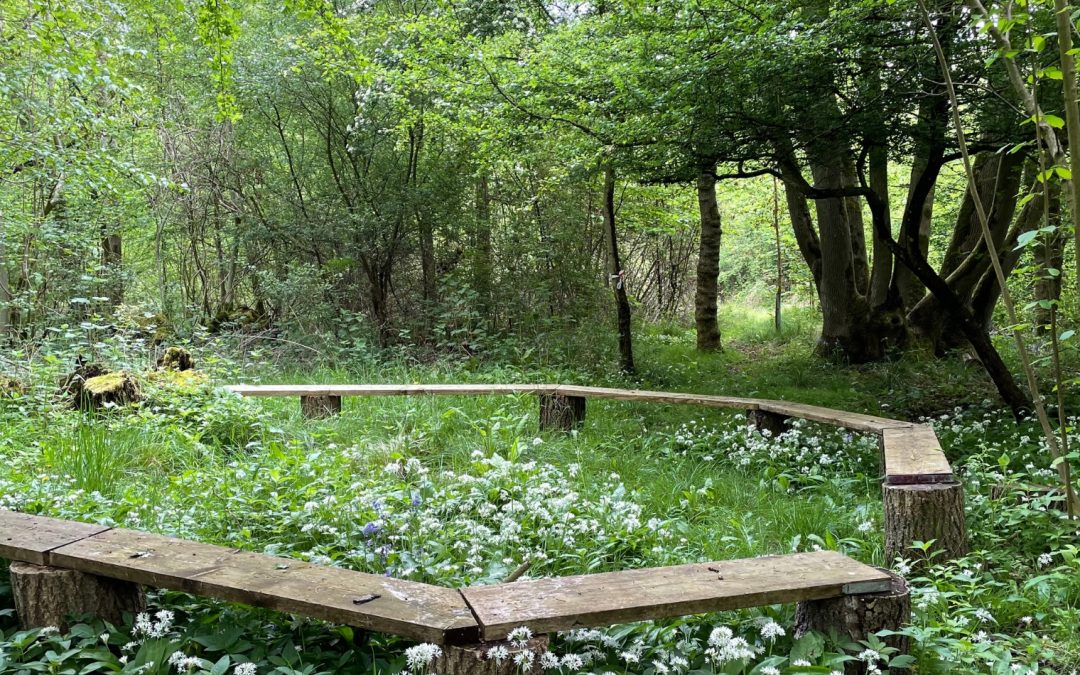
circle seating in woodland
woodland path through trees
people walking in woodland
pressed flowers and leaves
dandelion head
purple flower head
head with flowers

The Science behind the story

Scientific research has proved that spending just 2 hours a week immersed in nature has the potential to deliver significant health and wellbeing benefits.

Nature immersion activities can be active or they can be reflective, it all depends on personal preference. What is key to experiencing Nature conneciton benefits lies in learning to bring heightened awareness to your senses of sight, hearing, smell, touch and even taste. When you’re focussed on your senses it turns down the volume of your chattering mind and that in itself can effect mental relaxation and physical relaxation that helps reset emotonal balance. 

The experience of Nature Immersion is akin to allowing yourself to be bathed by soothing, warm water; a nourishing. bathing experience that has not only been practiced by the Japanese for over 50 years. Research into the benefits of bathing in nature has resulted in the practice becoming  a valued part of Japan’s National Health Service. 

Originally posted 2023-08-12 14:22:13.

Support for neurodiverse children

Support for neurodiverse children

Therapy support for neurodiverse children

It’s okay to be different

Neurodiversity just means that a person is different in the way they think. However, being ‘different’ often effects challenges in day to day living. 

To be neurodiverse doesn’t mean there’s anything negative going on, but rather a positive, through possessing a different way of thinking about things. People who see things differently have often been those who have changed the world we live in, for the better.

Of course, when a person feels they are ‘different’ and others don’t think in the same way they do it can cause confusion and upset, leading to loss of of self-belief and self-esteem. Too often a person who is neurodiverse can feel they don’t ‘fit’ and, over time, that can lead to anxiety around other people and/or situations. If your neurodiverse child is not coping well with life at the moment I can provide therapy-based interventions face-to-face or online.

Neurodiversity super-power

Neurdiverse people are, essentially, wired differently, but that doesn’t mean it’s a disability or an illness. In fact, neurodiversity occurs quite naturally in the population as a whole, a bit like right and left handed people.  In fact, research is demonstrating that numbers of neurodiverse people are increasing because more people are learning to be more open about their way of being, celebrating their way of seeing the world as full of positivity; a super-power of creative potential.

Supporting a neurodiverse child

Being neurodiverse can make a child become withdrawn or prone to exhibiting unhelpful angry behaviours. It could be that, as a parent, you recognise elements of being neurodiverse too? It’s important you don’t look for ‘fixes’ but rather ways to help your child feel it’s okay to be different than others, finding ways to empower rather than disempower their life experiences.  So, if being neurodiverse has impacted negatively on your child, help is available.

You can book at free 30-minute ‘Discovery session’ to have a no-obligation chat about your child, to see if you feel I might be able to be of assistance.


girl
boy wearing headphones

Neurodiversity is….

Conditions that could be considered as neurodiverse are Autism and ADHD (attention deficit hyperactivity disorder).

Dyslexia is another condition that might be considered an example of neurodiversity.

Dyscalculia, which is more related to numbers rather than words, is another example of neurodiversity.

Dyspraxia, manifesting as a person having difficulties with body coordination, (the person often being described as clumsy) can be considered an example of neurodiversity.

Dyspraxia, labelling for someone who finds it very difficult to organise themselves, can also be considered linked to neurodiversity.

In relation to Autism, other difficulties individuals may experience can relate to social interactions and getting along with other people. The underlying reason may be linked to neurodiversity becasue that person has difficulty in reading non-verbal signals or lack facilty to fully grasp what someone means, so they take things quite literally.

However, having outlined a number of neurodiversity examples it has to be said, being left-handed could be considered “neurodiverse” (that person is wired differently than the vast majority). Being different doesn’t have to be an anchor in life and there are plenty of examples of neurodiverse people who have not only achieved amazing things but changed the world for the better, becasue of their ability to think ‘outside the box’.

Find out more about how I could help support your neurodiverse child

Building self-confidence, self-esteem, improved focus and, importantly, techniques for relaxation, slowing down the mind and focusing more on the present moment can be incredibly helpful for neurodiverse children. 

The focus of my work with children is on helping them to flourish;  working with them to make positive use of their strengths. In other words, I work with children to help them appreciate their strengths, to grow their ability to connect more effectively with themselves, understand other peoples emotions and how to communicate their needs to others.

Gaining confidence to interact with life in ways that nourish rather then deplete is a valuable skill for anyone, but particularly so for neurodiverse children who need to believe in themselves to be able to build resilience for coping with a world that can be ‘out of step’ with their values and beliefs.

If you’d like to find out more about how I would work with your child, phone/text me on 07483 234109 or fill in the form below to book at free 30 minute ‘discovery session’ that can take place on the phone or online using Zoom or FaceTime.


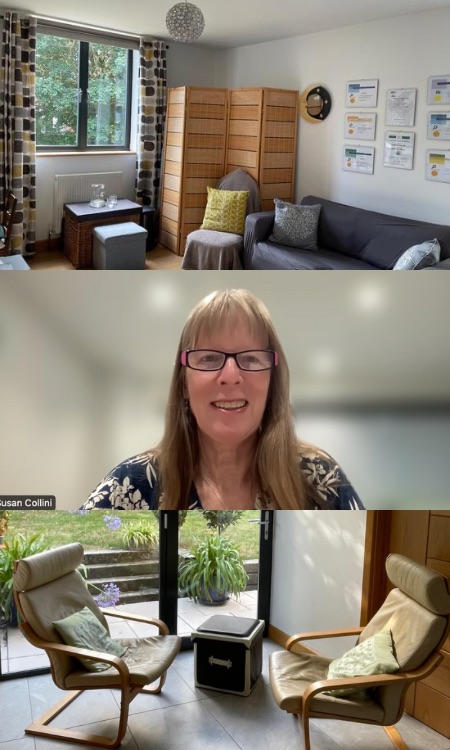
woman head and shoulders
CNHC logo

Book a free 30 minute discovery session

1 + 11 =

Originally posted 2023-09-01 09:25:30.

Emotional regulation through nature connection

Emotional regulation through nature connection

Connection with nature brings about deeper connection with self

This is a case study of a child who was expressing anger in unhelpful ways. Names have been changed, to maintain confidentiality.

Max got angry very easily, struggled to control his emotions and even small things could make him lose his temper. His parents had tried various ways to try and help him but were feeling pretty exhausted and overwhelmed themselves with failing to find successful strategies to lower the angry outbursts from their son that were both verbal and physical.

However, what Max’s parents had noticed was that when Max was outdoors he seemed more settled and happier in himself, so they started researching into therapists who worked with children outdoors. That’s how they came across me, as someone who works using the outdoors in a therapeutic capacity, to bring about emotional regulation through nature connection.

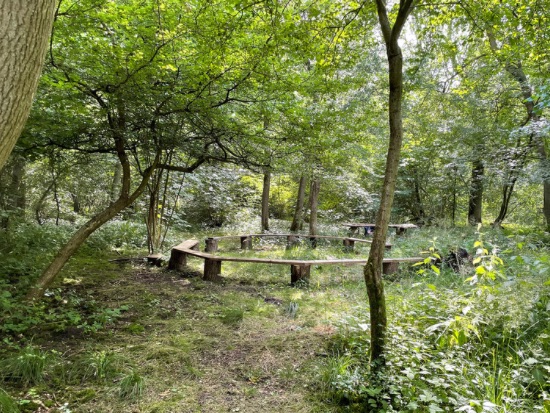
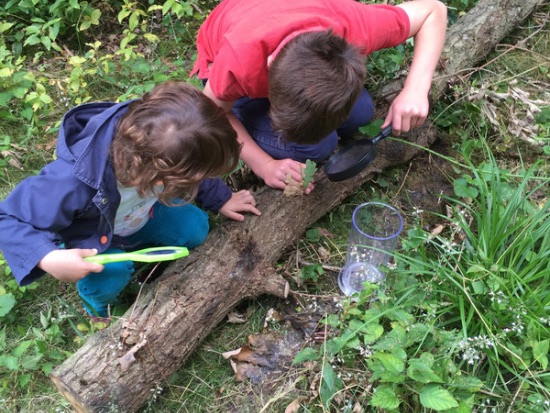
Max was initially reluctant to engage with coming along to therapy sessions in a woodland, but once he arrived, he was entranced by the wildness of the wood, the animal tracks he could follow and the opportunities for all kinds of fun such as fire making and den building. What Max found, over a period of just a few sessions, was that just being in the wood made him feel better inside. What was happening was that his emotions were soothed by his senses being engaged with nature, resulting in Max feeling a lot calmer and more at peace with himself.
 

Nature connection delivers a sense of joy

In one therapy session, as we were wandering through the woods, Max saw a deer with a young fawn and he was truly awestruck by the experience. He went home and started finding out more about the type of deer it was and all about them as a species. His parents were amazed at how Max not only became engrossed in what he was doing, which was something he usually struggled with, but how his general manner at home seemed calmer and not so prone to fly into his usual rages. Max just seemed happier and more content in himself, for longer periods of time at home, than had been the case previously.

What had happened was that Max had, through connecting with nature, learned about the pleasure and joy of relaxation and bringing focussed attention to the present moment. Once Max was able to access a more relaxed state he became more open to other therapeutic treatments, including IEMT (Integrated Eye Movement Therapy) to process memories that were effecting unhelpful emotions. IEMT was the therapy used to help Max explore how he came to feel the way he did, with a view to helping him reduce his emotional dysregulation.

Working with the parents was also part of the therapy treatment programme, providing them with strategies to use to help both Max and themselves. Changing behaviour was effected first through learning to relax in nature, followed by a more formalised therapy treatment programme suited to the particular need of both child and parent(s).

Find out more about how nature connection could help your child

The 20 acre woodland where I work is privately owned with no public access and is located near the town of Thrapston, in East Northamptonshire. f you think nature connection sessions could be helpful to your child then please get in touch by phoning or messaging me, Susan Collini, on 07483 234109, or use the contact form below and I will get back to you.
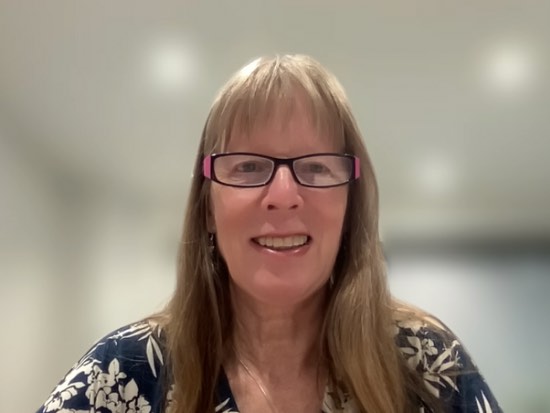

 

woman head and shoulders
CNHC logo

Book a free 30 minute discovery session

15 + 7 =

Originally posted 2023-08-26 16:35:13.